Thursday, October 1, 2026






We often misunderstand what strength looks like.
Many people associate strength with force. With volume. With the person who speaks the loudest, reacts the fastest or dominates a conversation through intensity.
But that is only one kind of power, and often the weakest kind.
Real strength is frequently quieter than that.
It is the ability to remain steady when others become heated. It is the discipline to choose your words carefully when frustration rises. It is the capacity to hold your composure when anger would be easier.
Anyone can lose their temper.
Not everyone can govern it.
That distinction matters more than many people realize.
Much of the conflict we experience in daily life does not begin with serious disagreement. It begins with poor responses. A sharp tone. A sarcastic comment. A cutting remark spoken too quickly. A minor issue becomes a larger one because irritation was met with more irritation.
Conflict often grows because someone decided to feed it.
Yet the opposite is also true.
A calm response can slow tension before it spreads. A measured word can redirect a conversation that was heading in the wrong direction. One person choosing restraint can spare everyone else the consequences of escalation.
That kind of restraint is not weakness.
It is control.
And control is harder than reaction.
Reaction is immediate. It asks nothing of us except impulse. Restraint requires awareness, patience and the willingness to think beyond the moment. It requires recognizing that the satisfaction of saying something harsh now may create damage that lasts much longer.
Words travel further than people think.
They linger in homes after arguments end. They remain in workplaces after meetings are over. They shape reputations long after tempers cool. They can close doors that took years to open.
This is why self-control deserves more respect than it often receives.
The person who can manage their emotions has an advantage over the person who is managed by them. One is directing the moment. The other is being directed by it.
You can see the difference everywhere.
The parent who stays calm in a stressful moment with a child.
The business owner who handles criticism without becoming defensive.
The public servant who answers frustration with patience.
The neighbor who chooses conversation in place of confrontation.
These people are not passive.
They are strong enough to remain steady.
There is also wisdom in knowing that not every conflict deserves participation.
Some arguments are invitations to nowhere. Some quarrels exist only because two people are equally committed to continuing them. Walking away from needless conflict is not surrender. Often, it is maturity.
Too many people mistake the refusal to fight as weakness.
In reality, it can be judgment.
The strongest individuals are not compelled to answer every insult, match every tone or prove themselves in every disagreement. They understand that dignity is often preserved through restraint, not display.
This matters in communities like ours.
We do not live anonymously. We see one another at the store, at school events, at church, at local games and in the workplace. A reckless moment of anger does not evaporate into the air. It follows relationships into the future.
That is why calm is more than a personal virtue.
It is a civic one.
Communities become healthier when more people know how to lower the temperature instead of raising it. Families become stronger when patience replaces volatility. Public life improves when firmness is paired with composure.
None of this means people should never speak strongly or address what is wrong.
It means strength should be measured not only by what we can express, but by what we can control.
The loudest person in the room may command attention for a moment.
The calmest person often shapes what happens next.
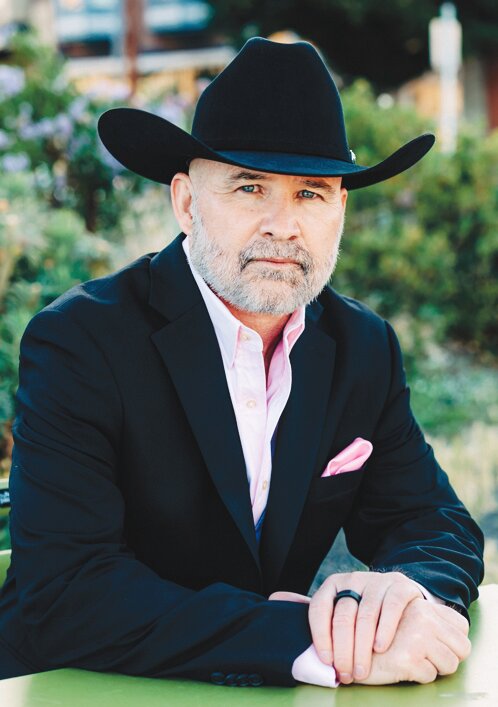
Terry Ward is the CEO of Ward Media and the publisher of NCW News, Cashmere Valley Record, Lake Chelan Mirror, The Leavenworth Echo, Quad City Herald, and the Wenatchee Business Journal. He can be reached at terry@ward.media.


Comments
No comments on this item Please log in to comment by clicking here