Thursday, October 1, 2026






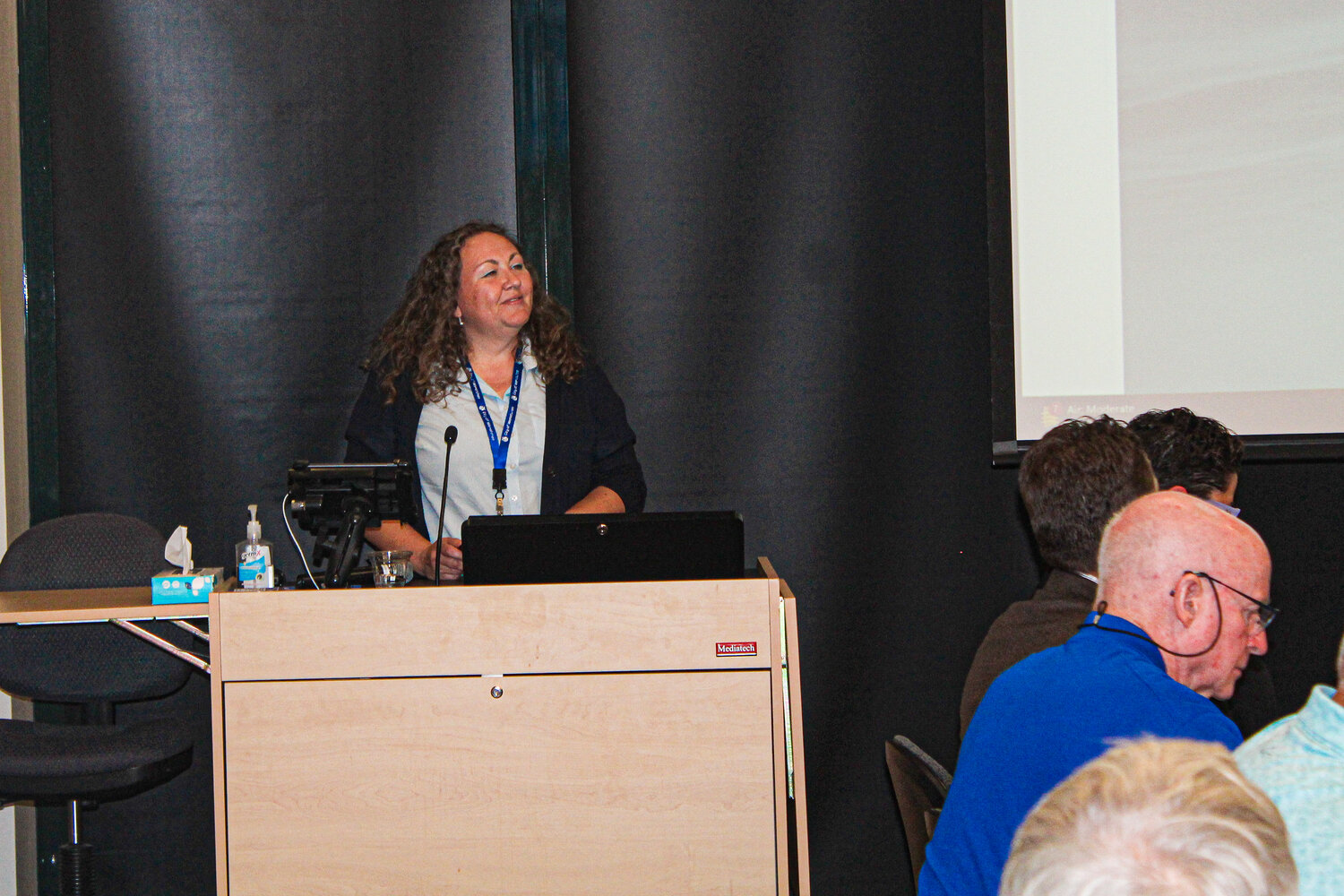
WENATCHEE — What if Wenatchee stopped talking about “waste” altogether, and started calling it “lost resources”?
That’s the vision Deputy Public Works Director Jessica Shaw brought to a tri-commission meeting of Chelan County, the PUD, and the Regional Port on September 9. Fresh off a study tour in Denmark, Shaw argued that a circular economy, where one business’s leftovers become another’s raw material, could give Wenatchee the kind of competitive edge usually reserved for much bigger cities.
“This is already working in communities the size of East Wenatchee,” she told commissioners.
Shaw pointed to Kalundborg, Denmark, widely known as the birthplace of “industrial symbiosis.” For 50 years, that community has built partnerships where waste heat from the treatment plant helps power Novo Nordisk, the pharmaceutical giant that produces much of the world’s insulin. The result isn’t just cleaner operations. It’s cheaper products, with insulin selling for more than 80 percent less in Denmark than in the United States.
Closer to home, Pasco recently opened a resource recovery facility that captures water for irrigation, solids for soil amendment, and gas for resale to Cascade Natural Gas. It is projected to pay for itself while supporting food processors like Darigold and Reser’s, who have already gotten on board.
Shaw said Wenatchee already has pieces of that model in place. The wastewater plant just down from Pybus — though it may smell strong — is doing important work. It reuses effluent to wash equipment, captures biogas from its digesters to heat buildings, and turns biosolids into soil amendment, with fertilizer certification underway. Excavated “clean soil” is screened and resold instead of being hauled to the landfill. If you need soil, Shaw says, give her a call.
She shared a Danish proverb she picked up during her tour: “Many a mickle makes a muckle.” Shaw admitted she didn’t know what the words meant, but said the lesson stuck with her — small efficiencies add up to big results.
The boldest opportunity may lie just a few blocks from Wenatchee’s wastewater plant, where a Craft District is taking shape. While only one brewery is currently located there, more are planned as renovations move forward. Breweries across Washington, Shaw noted, grapple with high carbon dioxide costs, often trucking CO2 in from Texas. In Denmark, boiler exhaust is captured and refined into food-grade CO2 for local breweries.
That kind of exchange could be one of the first local examples of industrial symbiosis. And the possibilities extend further. Fruit companies like Stemilt have long dealt with mountains of cull apples. In the city’s stakeholder sessions, participants imagined those apples feeding new value-added products — fruit leather was one suggestion — instead of going to compost or landfill.
Since January, Wenatchee has joined Spokane, Vancouver, and Port Angeles in a Department of Commerce-funded effort to map out symbiosis opportunities. Forty to fifty stakeholders showed up at each meeting, from brewers to the Port, from utilities to major agricultural employers. The consensus was that Wenatchee’s collaborative culture puts it in a strong position to lead.
For Shaw, the bigger shift is treating utilities as economic drivers, not just cost centers, and designing new districts with sharing in mind. She pointed to Denmark’s practice of pilot-testing new technology at every treatment plant.
“I really love the idea of pilot testing,” she said. “You want to be open to new technology, but you also want to make sure the benefit-cost evaluation is good.”
The next step under discussion is forming a nonprofit “Wenatchee Symbiosis” to coordinate projects, modeled on the Kalundborg Symbiosis group that has thrived in Denmark for five decades. In an aside to Ward Media after her presentation, Shaw confirmed that talks are already underway with one well-known local nonprofit to get such a thing in motion.
Shaw closed by reminding her audience that “waste” is only a matter of perspective. “Every leftover has value,” she said. “The question is, will we recognize it, and build our future on it?”
Andrew Simpson: 509-433-7626 or andrew@ward.media


Comments
No comments on this item Please log in to comment by clicking here