Thursday, October 1, 2026










CASHMERE — Sitting around a table in the Cashmere Middle School library before beginning a walkthrough of the campus, school administrators outlined the ideas shaping instruction across the building: collaboration among teachers, hands-on learning and new tools designed to support both students and staff.
Principal Sara Graves described a school where general education teachers, specialists and special education staff increasingly plan lessons together and share responsibility for every student in the building.
“I love the fact that our staff considers them ‘our’ kids,” Graves said. “It’s never like, ‘your kid.’ … I don’t hear that coming out of anyone’s mouth here.”
Members of the Cashmere School Board — Chair Aaron Bessonette, Vice Chair Nick Wood and board members Sara Pipkin and Aaron Lowers — toured the campus Feb. 26 alongside Superintendent Glenn Johnson as part of a series of walkthroughs highlighting programs across the district.
The school visits are part of a broader effort by the Cashmere School District to show how districtwide priorities, like including expanded career-technical education opportunities, the use of artificial intelligence tools in classrooms and increased support for multilingual learners, are taking shape at different grade levels.
While the middle school and high school focus on different stages of student development, administrators said many of the initiatives reflect shared goals across the district.
One of the most distinctive elements of Cashmere Middle School’s program is how career-technical education has been woven into the science curriculum.
Graves told board members that all seventh- and eighth-grade science classes are approved as CTE courses, meaning every student participates in career-connected learning regardless of which electives they choose.
“That means every single one of our seventh and eighth graders is in a CTE program,” Graves said during the presentation.
The designation also brings additional funding that allows teachers to expand hands-on learning opportunities.
Earlier this year, students traveled to the Leavenworth area for a winter field study combining outdoor recreation and environmental science. During the trip, students practiced testing snow and water samples while learning about watershed systems and runoff.
The excursion had originally been planned for the fall but was postponed because of wildfire smoke.
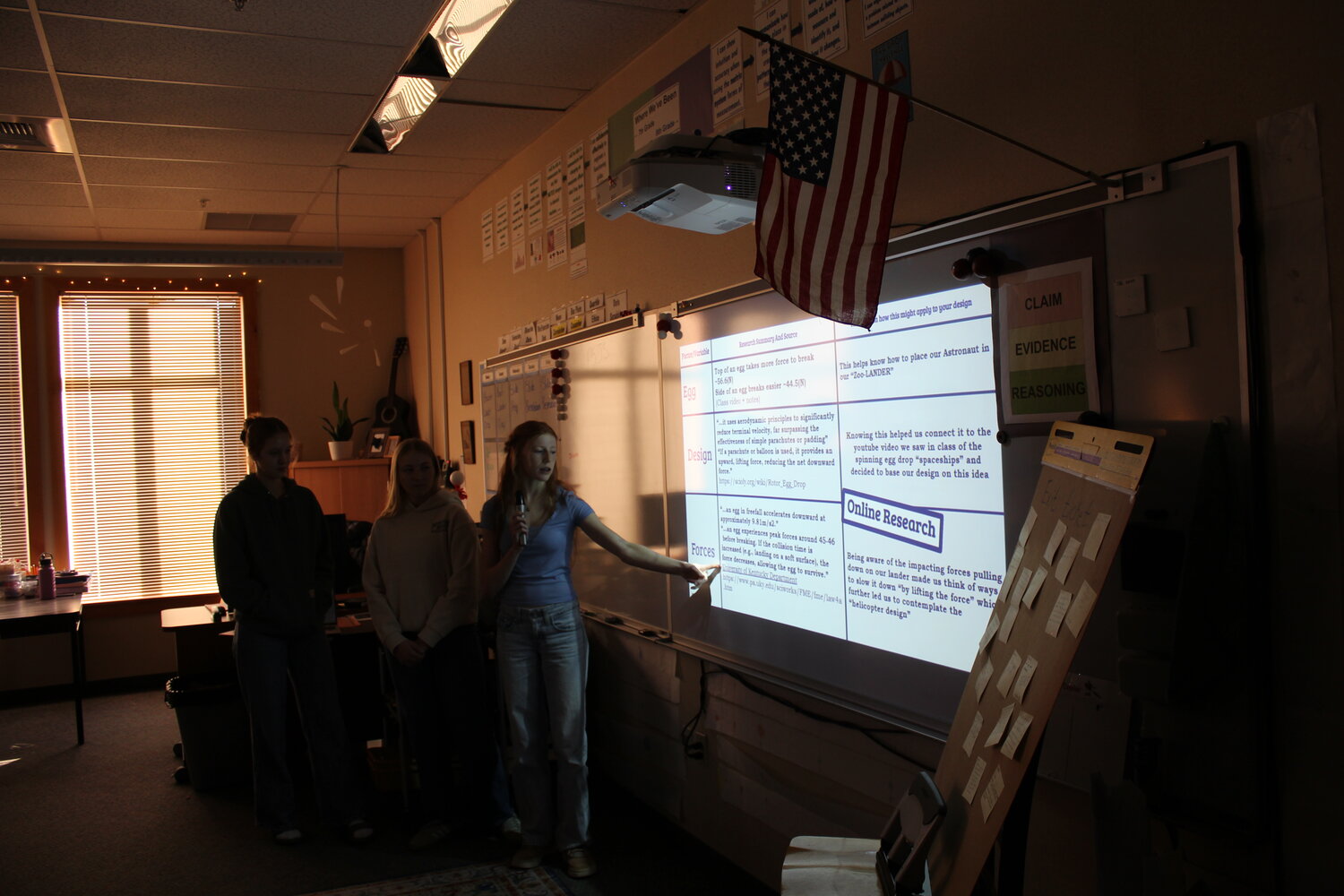
Graves also described how teachers across the district are using a common instructional framework known as claim, evidence and reasoning, or CER, to help students organize their thinking. And by “across the district,” Graves means they start all the way back at Vale Elementary. By the time they get to middle school, students have years of experience with CER and have integrated it into their own learning styles.
The structure encourages students to support their ideas with evidence and explain their reasoning in both writing and classroom discussions.
Graves said the framework is increasingly being used not just in written assignments but also in conversations such as Socratic seminars.
“True literacy comes from when you can read about it, write about it and talk about it,” Graves said.
Administrators also discussed how teachers are beginning to use artificial intelligence tools as part of their instructional planning.
The district is using the MagicSchool platform, which allows educators to experiment with AI-assisted lesson planning, feedback and instructional materials within a system connected to Google Classroom.
Teachers primarily use the tools to generate practice materials, plan lessons and provide feedback to students.
“We’re not changing what we’re doing,” Graves said. “We want to use this tool to increase efficiency.”
Students may also use AI in some classrooms for guided review activities and practice exercises. But students are restricted by the constraints of the system they have access to: MagicSchool does not allow them to simply tell a machine to write them an essay. It is instead used for refining critical thinking skills, learning how to ask the right questions, and researching topics more efficiently.
The library discussion also included a presentation from AJ Vaughns, counselor for grades five through eight, who described a series of short social-emotional learning lessons developed for middle school students.
The program delivers four lessons at each grade level focused on topics such as decision-making, healthy relationships, emotional regulation and personal goals.
“We just want kids to know how to be good human beings and how to handle life,” Vaughns told board members.
The lessons are designed to be brief but repeated throughout the year so students can apply the concepts in different situations.
After the presentation in the library, the group moved through several classrooms to see how those ideas were playing out in daily instruction.
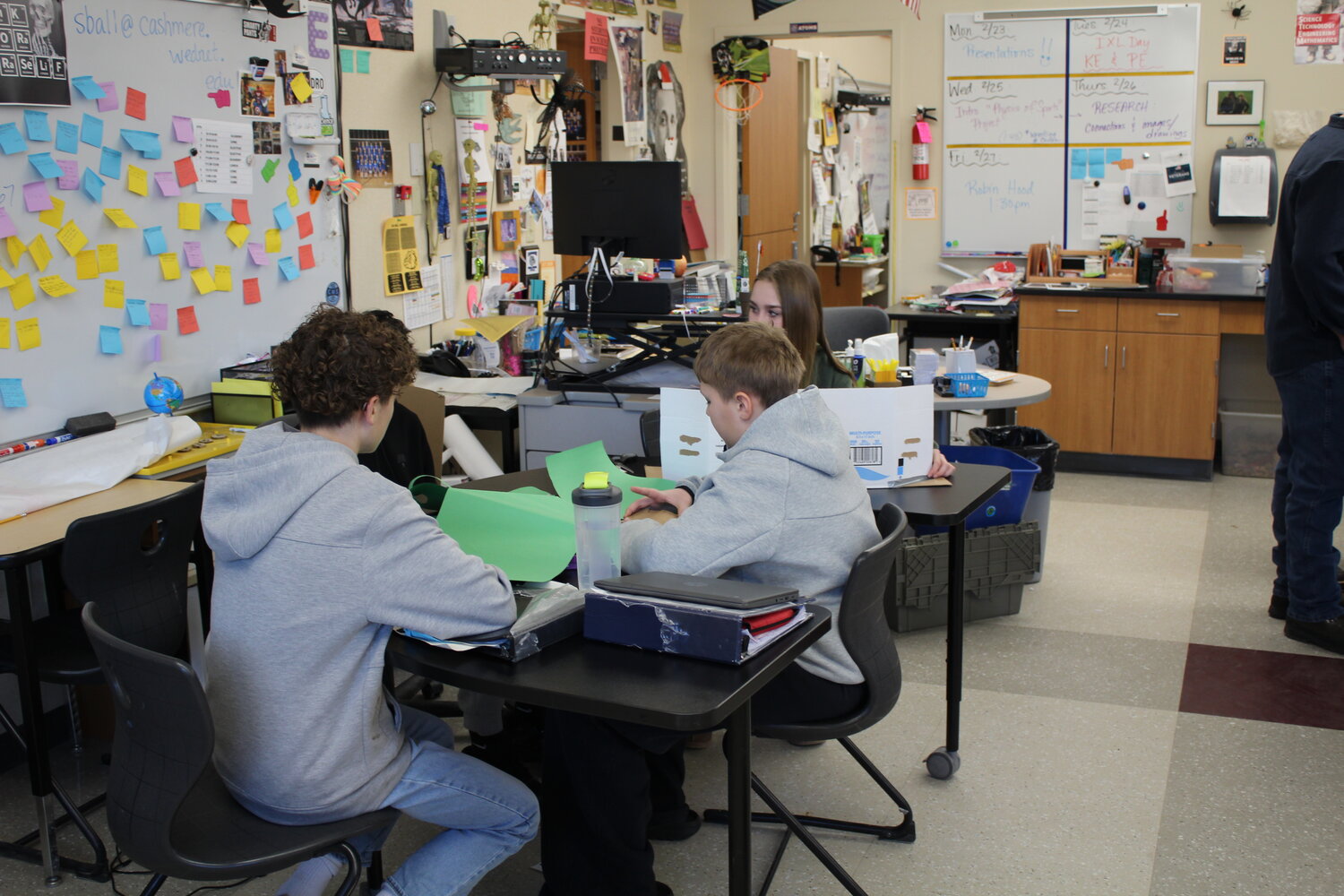
In one classroom, students were working on a project dubbed “Cake Wars,” building elaborate cake designs around themes of their choosing. One group had chosen The Lorax as its inspiration — one student explained it was her favorite book — while other teams worked on different concepts as they assembled their creations.
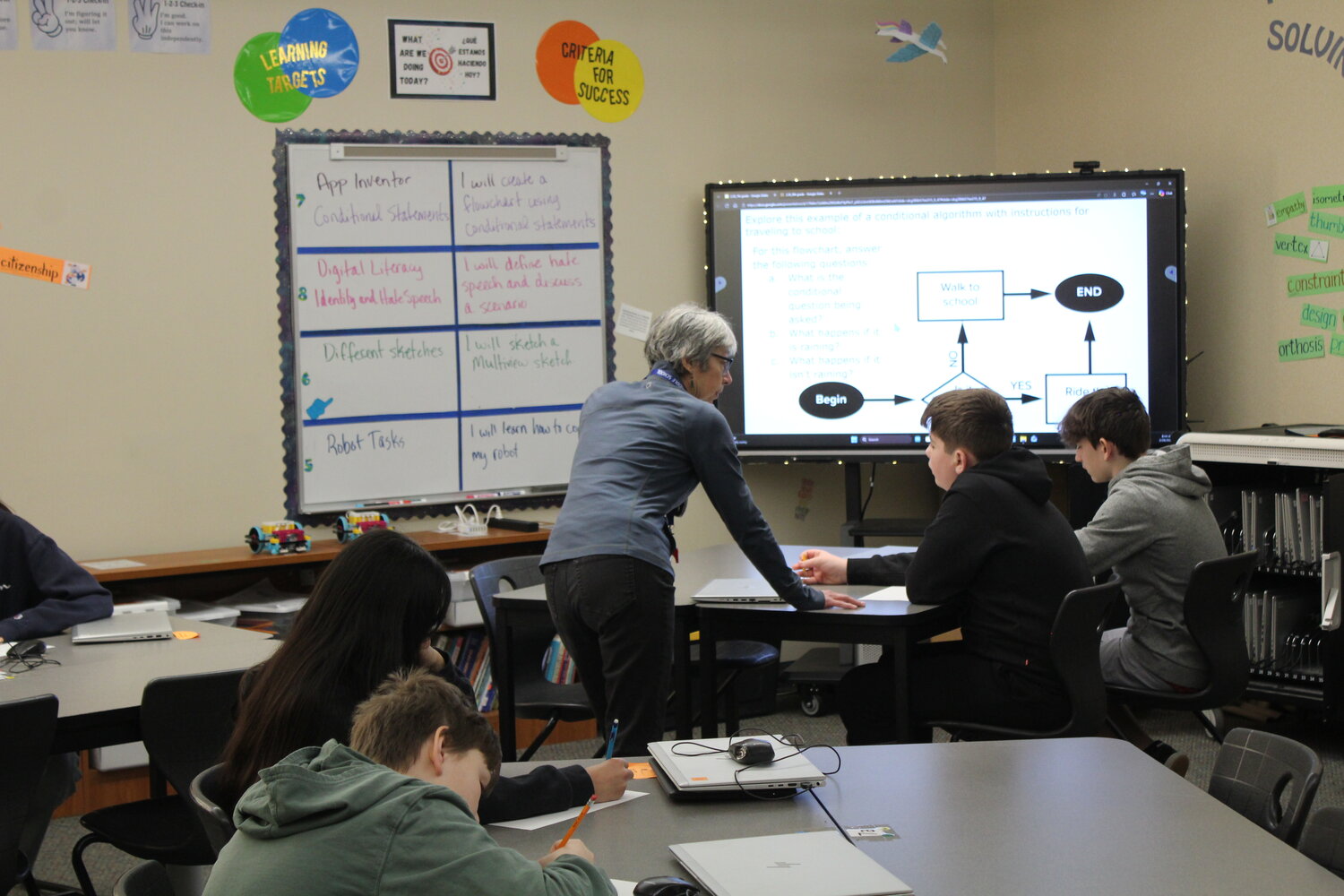
In another classroom, teacher Ms. Benita guided students through the logic behind computer programming by having them design a simple app using a flowchart of if-then statements. Students mapped decision points and responses before translating the logic into digital instructions.
The final stop featured students presenting small engineering projects designed to carry a raw egg safely to the ground from different heights. Working in teams, students explained the designs they created to protect the fragile cargo during the drop.
The projects reflected the kind of applied learning administrators described earlier in the morning: the combination of academic content with hands-on work designed to build problem-solving, creativity and communication skills.
Andrew Simpson: 509-433-7626 or andrew@ward.media


Comments
No comments on this item Please log in to comment by clicking here